Plantain: Traveller’s Talisman

Early Plantain Leaves

I’ve been reading Martin Shaw’s “Scatterlings” this winter. The message is a wise old one, that “what we’re searching far and wide for, turns out to be actually right where we live”. What I resonate with in Martin’s book is, because we’re in a cultural/technological trance we can’t see or access this deep, nourishing relationship with the land. We fly all over the world looking for this thing that we’re missing, chasing after this or that trend, rather than staying where we are, and burrowing into the present. By living in a deep way with the land, in a “nest” of presence, we come to know and be connected with the plants, animals and land Herself, as a living mythical being. One that embodies the secrets of our ancient past, and whispers out morning’s misty spells to create each day anew. When we are not present, we are someplace else. We find the nourishment and inspiration to really “be” at home where we live, through coming to experience Her mythical dimensions.

These are all things I deeply believe and have lived for more then thirty years. Ironically though, this winter I travelled for the first time in many years. And what I realized was, I may have the opposite problem to the seekers and wonderers. Which is, I’m so focused on these realities of the land, it’s very hard for me to get out and leave. I don’t mean, I’m afraid to go out or that it’s hard for me to leave my work. Rather, I feel so involved with the story and attached to the land, it’s hard to imagine it won’t all collapse when I stop listening and leave, or that it will be there when I come back. It feels like I’m walking out on my Grandmother, part way through her story. Even in February when she seems to be napping, the plot moves forward.

Yet, sometimes we’ve got to go. We’re called out, or the cage of our life gets too tight. This winter, the family and I went on a month long road-trip/book-tour down the Eastern Seaboard to the very tip of Florida. A small thing for most folks I imagine. But for two Taurus’s, who haven’t travelled in ten years since they had kids, it felt like pulling out a stump. In the weeks before we left, the pushing, pulling and hacking of our ties, to get us lose, began in ernest. As the day of departure was approaching, it felt like the main tap root we were pulling on was directly rooted into my gut. The pain increased with each day until I couldn’t sleep or eat well. When I went to the bathroom my stool was black. If you haven’t been eating blood pudding, this generally means there’s bleeding in your digestive tract. Not a good sign.

Before the pain, and seeing signs of blood in my digestive track, I had been thinking ‘gallbladder/liver’ because my digestion seemed really off. I had been taking bitters for my liver, and celandine once (which is very toxic) for my gall bladder, but these digestives weren’t helping as they have before. After suffering through another long sleepless night, on the morning of departure, fearing I might end up in a U.S. hospital without health insurance, I went to our local hospital. They couldn’t tell me what it was but the doctor thought it was most likely a bleeding stomach ulcer, which they can’t do anything for. They told me to watch for fever or other signs of infection and gave me prescriptions for tranquilizers and antacid. I never had to take either.

Once I realized that the problem was my stomach, and there was likely a bleeding (maybe infected) ulcer, and that it wasn’t my liver or gallbladder, my intuition immediately brought me to Plantain. No, not the banana, but the lowly herb. Sometimes, when we think “I know”, it gets in the way of our intuition telling us what we really need.

It’s always amazing when you think you know a herb and have used it for years, but then realize a whole new side of her. This has happened to me many times. Just like people, when they join in to heal or change something, whole new sides of them emerge that we have never seen. When I called on many of my herbal healers for help with Lyme disease, I came to know Teasel, Bee Balm, Boneset, Dandelion, Burdock, Cleavers, Sarsaparilla and many others, in a new way because of the more acute situation. These plants and thousands of others have so many hidden gifts to offer us when we are in need and ready to receive them. These herbs are gifts from the Gods to both sustain our health, and heal us in an acute situation.

Plantain, Plantago major has followed in the wake of colonization as a healing balm. A balm to heal the wounds to the Earth inflicted by horse and cart, and heavy soled shoes. And, a balm for wounds to human and animal alike. The juice, tea or poultices of the green leaf has miraculous properties as an antiseptic, anti-inflammatory and analgesic. Ribwort is one of Plantain’s common names, and a key to its traditional use. The ribs, which run the length of the leaves, signify how she pulls out toxins, stops bleeding and heals wounds. She pulls the pain and the toxins from the cut and sews it safely closed, free of infection. Thankfully, I’ve know plantain for many decades, and used her topically for every kind of bite to take both the pain and the itch away. As well as for boils, burns (sun and fire), rash (including diaper rash and shingles), mastitis and other infections. I’ve sold plantain to people in Central and South America because it’s in great demand there for use in healing internal aliments, including cirrhosis of the liver. But I had never worked with her myself for internal problems. Plantain is also well known as a lung remedy.

At our farm we wild cultivate her so we can harvest leaves for salad in spring, in early summer for cooked greens, late summer for medicine and we collect the seed in the fall for food. We add it as a part of a wild seed mix that supplements our flours. This highly nutritious oily seed is related to psyllium to she aids in digestion and elimination.

I made a good strong tea/soup and drank it for the first few days we were on the road, eating the leaves and all. I ate the seed in bread, and my morning porridge. And, I did tincture throughout those first “acute” days and afterward in smaller amounts for the remainder of the month long road trip. Within a day or two I was completely better, no more signs of blood or pain.

Plantain gone to seed

Like that healing wasn’t enough, she still had more gifts for me. In the extended use of this powerful herb I came to realize; not only is she a healer for the travel beaten roads of the Earth, and the wounds to, and within, our bodies, but the deeper mystery of why she has travelled with us for over nine thousand years. We brought her with us from Asia and the Northern Steppes of Europe, because she is a talisman of the traveler. Her presence and use as a tea, tincture or food has aided us, as immigrants, to humbly blending in with the new place in a useful way (and not aggressively colonize). And she’s given us the toughness to be stepped on and still thrive in diverse conditions. We can also look to her for the ability to quickly form roots that can draw from and transform poor over-compressed ground, where the displaced often find themselves.

Contained in what is the most common of plants, we step on every day, is both a food staple (of greens and grain) and miraculous multifaceted healer.

It’s somehow fitting that this gift who has been with us for thousands of years, so often goes unseen. As we grow up, we’re always told to “look up” and “look ahead”, to keep our “head high” and “chin up”, but really maybe we should be teaching our kids to “look down”, “look what your stepping on”, “look at what sustains and heals us”.

An ancient companion and mysterious healer is growing by your doorstep, don’t miss the chance to introduce yourself to divinity. 

SEEDING A FUTURE OF BEAUTY, FECUNDITY AND HEALING

Don’t underestimate the power of the seed. They are very, very small but without them life as we know it would end on the planet.

Elecampane Seed Head

The late fall is an excellent time of year for seed collecting and for starting to picture a richer, more diverse ecology. This dream, this vision of earthly fecundity is more possible and within our grasp than we imagine. To co-create such a future with the Earth is our ancient legacy. However, we have all been brought up with no understanding or re-membering of these responsibilities, or of our ancestor’s ways. Our landscaping and agricultural practices generally cut out the healing and rejuvenating forces of nature by cutting the ‘weeds’ out of the equation and placing chemical fertilizers and pesticides in their place. By contrast, Indigenous agricultural practices work with these very plants and forces.  As we get to know the rejuvenating nature of wild plants or weeds (otherwise known as herbs) and their medicinal and edible value we will hopefully realize the folly of our ways and invite these plants back into our lives, our gardens, our medicine cabinets and kitchens, giving them back the central place they once held in our culture.

However, this is easier said than done. Many folks want to create biodiversity and grow medicinal and edible plants but don’t know where to start. So, they go to a medicinal plant nursery and buy a few special (often rare) plants. You get them home and have no idea where to put them, because you’ve never seen the plant in the wild. So into the garden they go. Maybe it grows for a season or two if you’re lucky but most often it doesn’t thrive or ever get established because it doesn’t belong. Most herbs don’t feel they have a place in such compost-rich soil that we have for our vegetable and flowers. And they likely don’t have any of their evolved relations (fungal, plant or animal) in the soil and ecology you provided. Common plants are known as ‘generalists’ because they can survive under a huge range of conditions. But many rare plants need very specific environments. It’s most often these plants that are endangered because their niche habitat has been wiped out or changed unintentionally. The fact is we’ve largely stripped the Earth of unique rich ecologies. We stripped not just top soil through building, agriculture and erosion but the diversity of plants that can heal and ‘grow’ the soil. And in stripping the aboveground landscape we also strip the diversity of fungi and other micro-fauna and flora in the soil which evolved with and support these special herbs in a reciprocal way.

At this point you may well ask, how then do I reestablish rich diverse ecologies on the land for which I am the caretaker?

Here is my suggestion, work from the bottom up not the top down. Don’t buy rare plants because you want to ‘help endangered plants’ or just to grow something ’special’. Don’t buy them unless you already know them well and understand what they need and can provide that for them without too much effort. Instead, look at your land and invite the healing herbs that want to be there in. Come to understand where the land is at and how you can work toward healing and enrich it without too much cost or disruption to the local ecology. 

Angelica seeds

Changes to the land itself require a great deal of attention so I would suggest you focus on just one microclimate at a time over the period of a year before doing anything. Then you might do something like clear an area or burn it over or compost piles, create windbreaks, dig a drainage ditch or make planting mounds, seed green manure crops or top dress with mineral amendments. These alterations to the land are not necessary, it just means in the end you will have a more rich and diverse range of environs and plants that can thrive on your land. It is important to meditate on how the land might be changed from where it’s at, not from where you and your dreams are at. Move forward one step at a time, slowly working toward a co-created dream with the Earth. 

Then, after careful assessment, and possible enrichment of the microclimates, PLANT SEEDS. Some seeds require ground preparation some do not. Ideally, collect the seeds yourself or trade them locally. Unless its a local seed company anything you buy will not likely be harvested from anywhere near where you live. Even if the Latin name of the plant is the same, in reality there are many sub, sub species that are unrecognized in botanical categorization. In some cases this might be a problem, because the import may overshadow the evolved local variety over time. Or the non-local seed might not thrive. Or they may take many years to adapt. Importing seeds to your area can work and I have done it, but I assure you the easiest and ecologically best way to get your seeds is to simply find plants in your region that seem like they might grow on your land, or someplace you have access too. You’re looking to move the plant to a similar piece of land with similar conditions to where the seeds came from. Generally, seed that’s taken from within a couple hundred miles are considered local, but this totally depends on the plant. For example, I’ve seen virtually identical Mullein in Canada’s far north, the U.S. desert and mountains in Central America. And I’ve seen nettle change over a township line in Southern Ontario. But don’t let this paralyze you, I don’t believe in rigid lines, everything is evolving and a new species or variety may be what the land needs. You don’t have to worry about this too much with ‘generalist’ plants, but I say all this so you consider it well before settling on a seed source.

Lamb’s quarters Seeds


Collecting seed is all very simple once you know the plants, but it does take prolonged attention and timing. With a little effort in the first few years I was on this land in Golden Lake I seeded or planted about 60 plants into the ecology. After about ten years, of the plants regrowing the soil and ecology the land became an eden of diversity and fecundity, a herbalist’s orgasm. I’ve also enriched many disturbed and transitional areas of public crown land. You can wildculture land with little disruption, invisible to the untrained eye. Because isn’t done by changing big things quickly by cutting trees, bulldozing and plowing the land to fit our will (the way land is usually colonized). Rather, the changes happen slowly by finding plants that fit and work with the environment. These ‘agents of change’ can thrive naturally without any help from us. Starhawk made Fukuoka’s idea of the ‘seed ball’ famous, by applying his agricultural development to activism. The seed balls are made from seed, soil and clay (so they hold together) and can be dropped or even lobbed anywhere. This can even be done on ’private’ or ‘restricted’ land that has been abandoned, to help it evolve, be more diverse and serve all of nature. You can also just mix seed with sandy loam in a bucket and sprinkle the mix where you want the plant to grow. (This technique is outlined in detail in my book, ‘The Madawaska Forest Garden’.)

Because these plants are wild and not garden varieties that are bred for visual impact, and because they’re growing in a ‘wild’ hard environment they have real MEDICINE for healing. 

I would also recommend you think about plants for different successions on the land over time. This means including bushes and trees. Herbs are generally healers of the land, meant to thrive for a time and then fade, in order to prepare the earth for the next wave of bigger plants. These waves keep coming and moving the land toward its climax ecology.  For example, the exhausted fields around the farm where I live are meant to be, and will eventually become, a pine-hardwood forest. Without intervention this process might take two hundred years for hardwood forest to reclaim the land. And that’s assuming that the seeds for the trees and earlier successions exist in the seed bank or the surrounding ecologies and have the means to migrate to this place (through wind, birds and animals). Otherwise it will never recover to a natural climax state. By introducing the right seed at the right time in the right place, which is essentially just giving the land the right tools, the regeneration time can be cut from 200+ years to 100 years.   

Dandelion Seed Head

This process can be bumped along at almost any point to speed the natural succession and evolution of the land. For example, a healthy forest of softwood having grown back in since the land was cut forty years previous, can be seeded with productive hardwood seeds from trees like Oak and Sugar Maple to bump along the succession. To do this with sugar maple seeds think about how they naturally fall and grow. They are layered in with the fall leaves and sprout in the damp leaf litter in the spring. Oak by contrast fall like a stone. They might bounce and roll finding a nook to overwinter in, but not likely. Acorns are prime food for almost all the birds and mammals in the forest. So they evolved to be buried in a cash by a rodent and germinate deeper in the ground itself. Sugar maples make keys, that can be easy gathered in abundance in the late fall. These, even with leaves from the site mixed in, can be scattered or lightly raked into the litter of the softwood forest. For Oak, Beech and other nut bearing hardwoods, collecting is the hard part. Low hanging limbs are great to gather viable nuts from. I also used to go out first thing in the morning after a big late summer/early fall storm to collect fallen nuts before the rodents and deer got them all. Stick nuts into the ground one nut at a time an inch or two deep when the soil is moist in the fall. They, like the Maples should stratify over the winter and then will germinate in the spring. Sometimes with bigger nuts this takes two years. A small tip for collecting Black Walnut or Butternut type of nuts is to provide the squirrels, who often beat you to the nuts, with hiding places. Like an up-side-down pot or hollow log under the tree. And then just collect them during the storage season, leaving a few nuts in the stash. 

Another example of helping bump along a natural succession, on lower seasonally flooded land, would be to introduce high bush cranberry, elderberry. These can be seeded like the nut trees but critters like these ‘fruit’ as much as we do. So with many water loving shrubs you will have greater success with cuttings. Hopefully from other nearby patches. These will grow maybe 50% of the time. Cut the cuttings on an angle so they can be easily shoved an inch or two into the ground, in a clear area where there isn’t much competition. Do this at the right time of year (spring or early fall when there is lots of moisture) or keep it moist and shaded during the summer. 

Marshmallow Seeds

Another example for higher land would be to introduce berry shrubs like blueberry or service berries and small nut trees like hazelnut. These can be started from cuttings (in pots) or placed as stratified seed directly into the soil about an inch deep. As cuttings these, unlike elderberry or crampbark (high bush cranberry), need a rooting hormone (from nursery) as well as consistent moist soil for a month or two.

May the power of seed be with you!

Want to be the first to hear about our upcoming online herbalism course starting in March? Details coming soon! 
Send us an email to be notified. 

The Meaning and Gift of Worrying

getty images
getty images

While this post is not about Covid in particular, it is about an equally contagious and devastating related illness. This illness is called ‘worrying’.

Worrying is not an acronym for something else, it’s a verb; to worry. The word ‘worry’ is so common and old we’ve forgotten about her. We turned our back on her and come to favour our more modern psychological terms. And in doing so the real meaning and gift has been lost. Our modern understanding of the word is a hollowed out caricature.

This is from Wikipedia:

Worry refers to the thoughts, images, emotions, and actions of a negative nature in a repetitive, uncontrollable manner that results from a proactive cognitive risk analysis made to avoid or solve anticipated potential threats and their potential consequences.

That is one shallow pile of jibber jabber.

You might be saying,  “So what. Definitions of words change over time, they come to mean other things”.

In losing the old understanding of the word we lose the old perspective that stands behind it and with that we lose the ancestor’s gifts of wisdom and healing that are hidden in the word, like a treasure in a chest handed down to us.

These days we often hear about anxiety and post traumatic stress disorders and depression, as through our emotional state of mind is like the weather; that it just randomly happens. Our modern allopathic understanding is that we have no say or responsibility in these mysterious mental moods. That they are simply chemical imbalances, that can be treated with man made pharmaceuticals that match or augment those in the brain.

There are so many deep flaws in this approach and understanding it’s hard to know where to start.

In my experience, and that of the many loved ones I have lost to the pharmacological approach it’s clear that if there is any truth to this understanding we are in the very beginning stages of grasping it. The only other and somewhat more human approach available to most people is psychology. The psychological approach would hold that our troubled and worried existence comes from a subconscious need to re-manifest the past trauma in the present so it can be healed.

While I think there is truth in these modern approaches, they both heavily suffer from the same colonial condition: that of externalizing the cause, or making ‘the other’ the problem. While the psychological approach might be closer to the mark it’s a incomplete theory at best. The evidence of this theory’s failure is that two people can go through the same traumatic experience and one will move on with resilience while the other will be frozen in trauma for decades.

Unlike our present-day misunderstanding of these so called stress disorders, there was an old time approach full of integrity and honesty that stands behind the simple phrase “I’m worried”. It’s an admission of our part in a bigger problem,  grounds us in responsibility for our emotional state, recognizing the situation as something both real (external) and participatory.

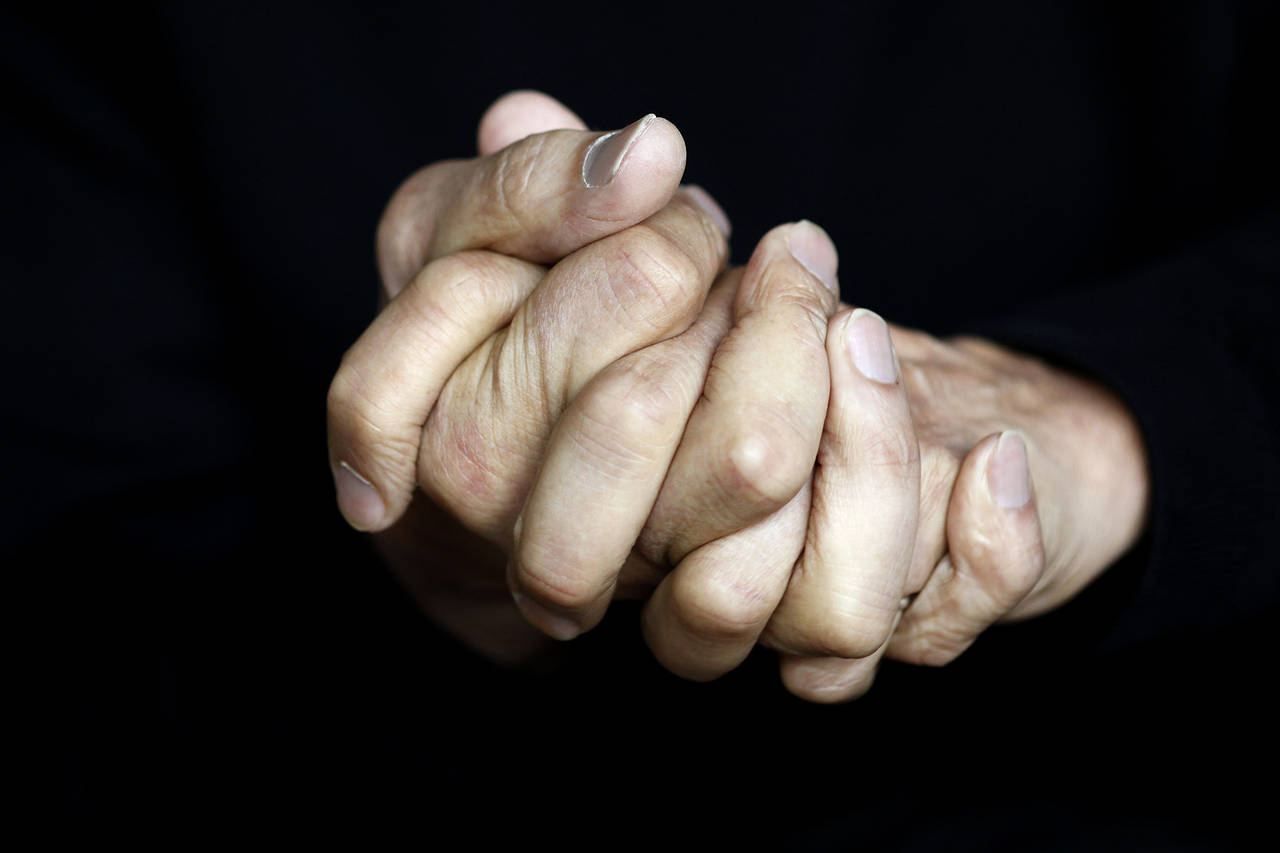
The original word ‘worry’ actually means “to strangle or choke” the life out of something. Wringing hands is a central image in the old understanding of what worrying actually means. It’s not something that happens to us, it’s something we are doing. Or, that we do to others, which relates to its other original meaning that was “to block” our free movement. We still refer to this second understanding as being ‘hedged in’.

When we worry, we block ourselves and we choke the life out of everything related to our ‘worry’. When we worry, we are stuck in the past or the future. This is the real problem with worrying because life only exists in the present, right here, right now. When we’re worrying it’s impossible to be truly present.

These ancestral teachings have been right there in the word all along to help heal us from the very condition it refers to. But we ignore or are unaware of these teachings in preference for our ‘objective’ scientific nomenclature.

Worrying, like all our so called negative emotional expressions has its natural place and serves a ‘higher’  purpose. It, like fear or jealousy, is calling us to attention. Something is chafing our emotional being and we’re feeling it. That’s good. What a gift, that can move our awareness to an invisible imbalance within us!

If we’re paying attention, and receiving the gift of the worry with both hands, we will recognize the sore part in ourselves that’s causing the chafing and not just project onto an external source. If we watch ourselves carefully we can see how we ‘attach’ our emotional body to an external situation with our thoughts.

In this recognition of seeing the way a worry attaches itself to us, we are being given a divine gift of healing. A gift to help us re-live and let go of some insecurity caused by a trauma from our past.

So, worrying is a natural part of healing or working through trauma. It’s not ‘negative’ in that it’s meant to bring our consciousness to a fearful pattern, so we can let it go of it and be free and fully present in our life again.

Worrying is only a problem when it is ignored or goes unexpressed and it sticks with us in our thoughts, keeping us going around and around.

When we keep twisting everything, choking ourselves with fear and worries, we are mentally unable to see our pattern and stop. Then, the imbalance must to go to the next (more dense) level to find resolution. It comes to physically show itself when we are unable to see it or deal with it emotionally and mentally. And so we get physically sick. Long ago this was understood as the ‘disease’ phase, that too much ‘worrying’ could bring on. ‘Dis-ease’, says it all, right there in the word.

This word, like ‘worry’, carries the same confirmation and understanding of our emotional state as central in the causation of the illness. Another old word like this is ‘fret’. Which meant “to eat up in a glutinous way”. The hidden and lost teaching in the word ‘fret’ is that we are indulging in a glutinous manner with our emotions.

These days we see the illness and the causes for it as purely external. We think illness comes to us as a virus or bacteria that we get. We deduce our illness by the unpleasant physical symptoms (that an allopathic doctor might recognize). Words like ‘disease’, ‘worry’ and ‘fret’ are from a time long before any understanding of ‘germs’, from a time before our ‘advanced understanding’, and so we view them as archaic and not very useful. And yet, we in our extensive (and obsessive) ability to physically diagnose illness have lost the old healing wisdom these words hold.

I am writing about this now because I see the fear around Covid as almost suicidal. Certainly as very unhealthy, physically and emotionally. Covid is a disease of the respiratory and circulatory systems, that’s the lungs and our heart. Continual worry and fear greatly weakens not just our immune system but these specific emotions (worry – heart, fear – lungs) in excess, weaken the heart and lungs.

So, if we imagine this disease and the deaths from it are not somehow directly related to our emotional state; if we haven’t made that connection that we called this thing into being with our hurried, fretful life, then we must have our head in the sand. Like so many things we do now as a culture, the way we are reacting, personally and collectively, is the exact opposite of what we should be doing. This shouldn’t be surprising because we are still going the wrong direction as a civilization, so of course all our reactions are backward. The fearful daily life most people lead now is its own epidemic.

The truth is that the fear was already there long before Covid, it just needed a home. At other times, it found a home in AIDS, Ebola, SARS, Lyme Disease and now it lives in Covid. We are the ones giving it that home. And, that this fearful behaviour is being fully promoted by our government and ubiquitously distributed by mass media is tragic and sad to say the least.

Just to be clear I am not into conspiracies, I do not believe this was a man made illness. But it is a man made crisis. And as a healer I find the constant fear mongering truly sickening. As I do the conspiracy rhetoric. The conspiracy is four thousand years old, and while the means may change, the end is always the same. We are serfs or slaves working for a super elite.They are not the illuminati they are just rich families trying their best to hold onto their power. But the meek shall inherit the Earth.

What people imagine is a conspiracy runs so deep they’d stop pointing the finger if they knew. And it’s not aliens, it’s us. It’s in our blood, our every step, glance and thought. It’s called patriarchy and we are all the children of it. Children of war and colonization.

Even when the corruption is exposed things don’t change because our divisive reaction to it is part of it. Feeds it. You do not change a warrior by challenging him with a sword. You change him by turning his sword into plowshares, you turn him into a farmer and feed him the ambrosia of the Earth, of life, until he “comes back to his senses”. Homer knew this over four thousand years ago, when he wrote of Odysseus’ adventures.

I am not the least worried about Covid. Not because I’m a healer or because there isn’t any actual concern, but because it is part of the natural order and I am not afraid of death. Viruses have served evolution in many ways over time, it is part of their ‘higher’ purpose. In one sense they have made us what we are. And so by running in fear from this being that has come to us as a healer, as all illness does, we are running from our own fate and evolution.

By fearfully isolating ourselves and developing vaccines rather then changing the way we live and think we are making ourselves weaker and helping this virus and other pathogens evolve and get stronger. On a personal level we can be cautious and build our immunity and work with this virus in a dance, so that we may evolve and grow back into a balanced state. And the virus will grow weaker in time. My statements here are not based in some pie-in-the-sky ideology but practical historic and scientific fact.

I know the changes the Covid has brought are hard, but growing pains always hurt. Try to keep in mind it’s all good. We are not being hard done by, we’re being gently reset. And despite our foolish reactions to this situation we still have the choice to move into what and where we are meant to be, as individuals that can lead a lost culture. Trusting, not that we are victims in a conspiracy or subjects of punishment for our sins, but that we are an integral part of a self healing body, the Earth.

May we all use our worries to wake up and heal ourselves.